



Sales Proposal Best Practices: 11 Effective Tips

The sales proposal. The way you prepare and present it to potential clients has a huge impact on the success of your sales. So how do you prepare a proposal that actually sells? We have put together a list of 11 practical sales proposal best practices that will raise the quality of your documents! And if you want to go through the whole process step by step, start with our sales proposal guide.
First impressions
A company presentation is an obvious element of every proposal. Everyone naturally wants to show their best side and prove they are the best choice the client can make. There is nothing wrong with presenting your strengths (it is absolutely advisable!), but you have to be careful about how you do it. We are professionals, our services stand out with their very high quality, and so on - what do you think when you read this? What do these phrases tell you?
When describing yourself or your company, imagine a client who reads it asking: what's in it for me, what does it mean for me, what do I gain? Drop the overused phrases that bring nothing concrete. What instead? Do you hold certificates confirming your skills? Or maybe there are logos in your portfolio you want to show off? Your presentation will also benefit from numbers, e.g. 50 companies have already increased their sales with us by 45%, and testimonials from your happiest clients.
The shorter, the better
The longer your proposal, the smaller the chance that a potential client will read it attentively cover to cover. It is far more likely they will quickly switch to skimming, missing the most important information along the way. An oversized proposal can also negatively affect how the client perceives your product or service. Even if it is not actually complicated to implement or use, the client may get discouraged, associating it with a lengthy, tiring read.
It is hard to point to an ideal proposal length - it depends on many factors: the type of company, the client, the industry. When preparing a proposal, focus on the information most relevant from the potential client's perspective, the facts crucial for their decision. Also drop overly sophisticated language and long compound sentences. Plain language, avoiding specialist industry vocabulary where possible, and bulleted or numbered lists will work much better.

Graphics and photos welcome
Imagine you have a 20-page proposal to read with not a single graphic or photo. 20 pages filled with wall-to-wall text. Something tells me you would not remember it fondly, and retaining the information would not be easy. Did you know the human brain processes visual content 60,000 times faster than text? Quite a difference, right?
Keep that statistic in mind and try - within reason and in moderation - to replace written content with visuals. Infographics, tables and charts let you present the most complex data far more effectively, while catching the client's attention and sticking in their memory. When preparing them, keep the colors and fonts consistent - ideally matching your brand.
Give them a choice
Some schools of thought suggest that a single package in a proposal is perfectly sufficient. This approach - a bit lazy, by the way - will not speed up the potential client's decision at all. When looking for the solution that best fits our needs, we tend to compare the options available on the market. To minimize the risk that, after seeing the only solution you proposed, the potential client starts looking around for a better alternative at your competitors', give them several options to choose from. Let them compete - but with each other, within your proposal and under your control :)
A good solution is to propose three or four packages at different price points, built around the client's needs. It gives the impression that you really took the time to tailor something especially for them. Moreover, with several options to choose from, clients are more satisfied with their final decision. That is because comparing solutions lets them better assess the value of each one. On that basis, they can choose with the conviction that they picked the best deal.
Analyze and improve constantly
Especially when you are just starting out with proposals, it is important to find the proposal template that works best for you. Prepare a few templates at first, differing in length or slide order, then pick the one that performs best with your clients. In your Sellizer proposal statistics you can check which pages and sections recipients spent the most time on and which they skipped. On that basis, you will create more effective proposals in the future.
What other metrics are worth monitoring to keep improving your sales? Visit the Reports tab in Sellizer. There you can check:
how many proposals you sent,
how many of them were opened,
how effective your proposals were,
how attentively your proposals were read,
how much time recipients spent on your proposals on average.

The client comes first
Many companies devote too much of the proposal to presenting the advantages of their solution. If the client asked for a proposal, it is already a sign they saw potential in your company. Now they would like to learn how that potential translates into their benefit in practice. Keep that in mind: when presenting the features of your product or service, describe how they will be used and what effect they will bring. Because it is the effect, not the features, that the client wants to buy. Always present your solutions in the context of the potential client and their problems.
Make contact easier
Questions from the potential client about the proposal always come up. That is a good sign - someone has actually analyzed the document you prepared. Now you need to clear up any doubts - the sooner, the better. Since we are all busy and surrounded by distractions, it pays to meet the client halfway and use tricks that make contact - especially initiating it - easier.
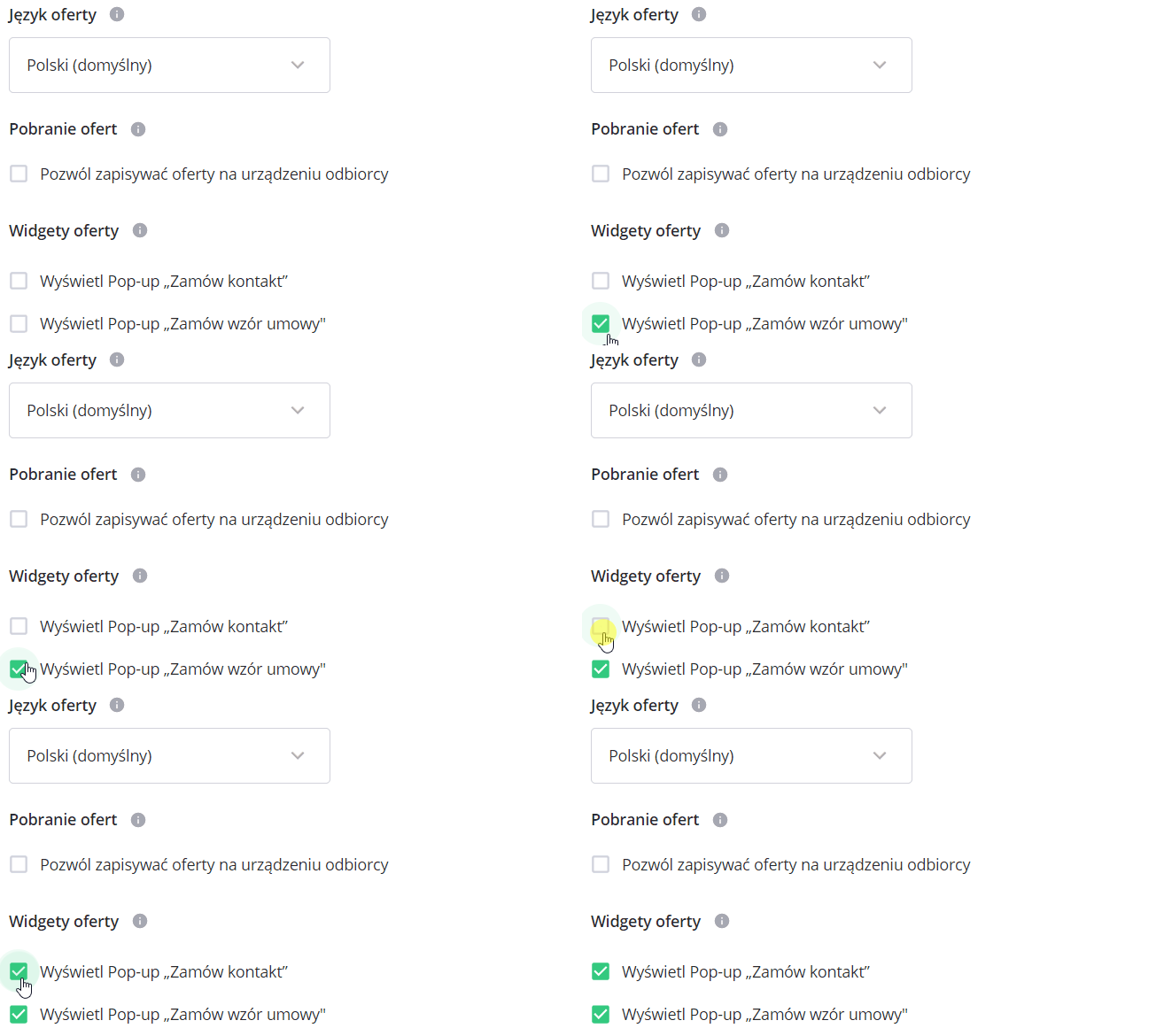
Widgets you can add to proposals sent with Sellizer help at this stage. You can use two options (separately or together): Request contact and Request a contract template. How do they work? If you add them to your proposals, recipients will see a popup while reading, where they can leave their details asking for a call or a contract template. We will notify you about every such request immediately by email. This deepens the relationship you are building and streamlines your service, increasing the chance of a sale - in less time.
Also remember to:
Keep the proposal structure organized - divide it into titled sections in a logical order; avoid chaos and mixing threads.
Set the proposal aside for a while after preparing it and come back later - this way you will catch typos and unnecessary words and sentences faster. The harder a proposal is to understand and the more convoluted its writing, the smaller the chance the client will want to take it.
Make only promises you can keep - do not present solutions that are still in the planning phase or impossible for your company to deliver just to win the client. They will quickly sense something is off, and as you surely know, the power of recommendations - especially negative ones - is priceless.
Show the potential client how together you will move from point A, where they currently struggle with a problem, to point B - where, thanks to you, the problem is off their plate. A simple visualization showing what actions will be taken, when and by whom is enough to assure your client they will reach their goals with you.
FAQ
How long should a sales proposal be?
Data from proposals sent through Sellizer points to about 6 pages as the sweet spot. Recipients spend under a minute per page on average, so every page has to earn its place: key needs, solution, proof, pricing, next step. If a section only matters to you, not the client - cut it.
Should a proposal contain one package or several options?
Several - usually three price variants built around the client's needs. Options keep the comparison inside your proposal instead of sending the client to competitors, and choosing between variants feels better than a yes/no decision on a single offer.
How do I know which parts of my proposal actually work?
Stop guessing and measure reading: per-page statistics show which sections hold attention and which get skipped. Pages nobody reads are candidates for removal (one Sellizer client cut a proposal from ~30 pages to 10 and doubled average reading time), and the most-read ones should move toward the front.