



Three Tips to Not Lose a Potential Client

When a sales opportunity appears on the horizon, the salesperson does everything in their power to win the new client. A good salesperson has an established sales process - they know what to do, step by step, to lead a potential client from first contact to closing the deal. A very good salesperson, however, also knows when and how to contact the client to shorten the sales process. What separates a good sales practitioner from a very good one is the ability to optimize their actions.
By optimizing your actions, you can improve not only your sales results but also the experience of the client being acquired. Contact with the client is key to building the relationship and executing the sales process. It is also what usually takes up most of a salesperson's time. Here are three tips on what a salesperson can change to avoid losing the client along the way.
1. Stand out at first contact
Reaction time to an inquiry sent by a potential client is of key importance. Contact that comes too late may cost you the sales opportunity. Why? If the client is actively looking for a solution, they often want to compare offers from several companies. So they send inquiries to the chosen companies and wait. Suppose a salesperson from one company contacts the client within an hour of receiving the message, the second gets back within 24 hours, and the third within a week. If the client is ready to buy and the differences between the three companies' solutions are small, which company do you think has the highest probability of winning that client?
What to do to react faster to the client's first contact:
set an alert for incoming client inquiries - e.g. an automatic Slack message about a new inquiry,
appoint a person who responds to incoming inquiries and makes sure it happens promptly,
set a maximum reaction time for a salesperson's response to an inquiry.
2. Keep your finger on the pulse after sending the proposal
Once a salesperson sends a proposal to the client, they hope the client will read it right away and come back with feedback. Unfortunately, not every potential client is eagerly awaiting an email with a proposal. That is why salespeople tend to call clients repeatedly or send reminder after reminder, asking whether the client has had a chance to read the proposal. As you can imagine, the potential client does not react enthusiastically to constant nudging that only pulls them away from work.
That is why this contact is worth optimizing. The salesperson can send the proposal to the client using the Sellizer integration with Livespace CRM and have insight into which proposals the client received and whether they opened them - and only then reach out to propose a call. This way the salesperson does not have to make many unnecessary calls to the potential client, and the client gets a call exactly when they are ready to discuss the proposal.
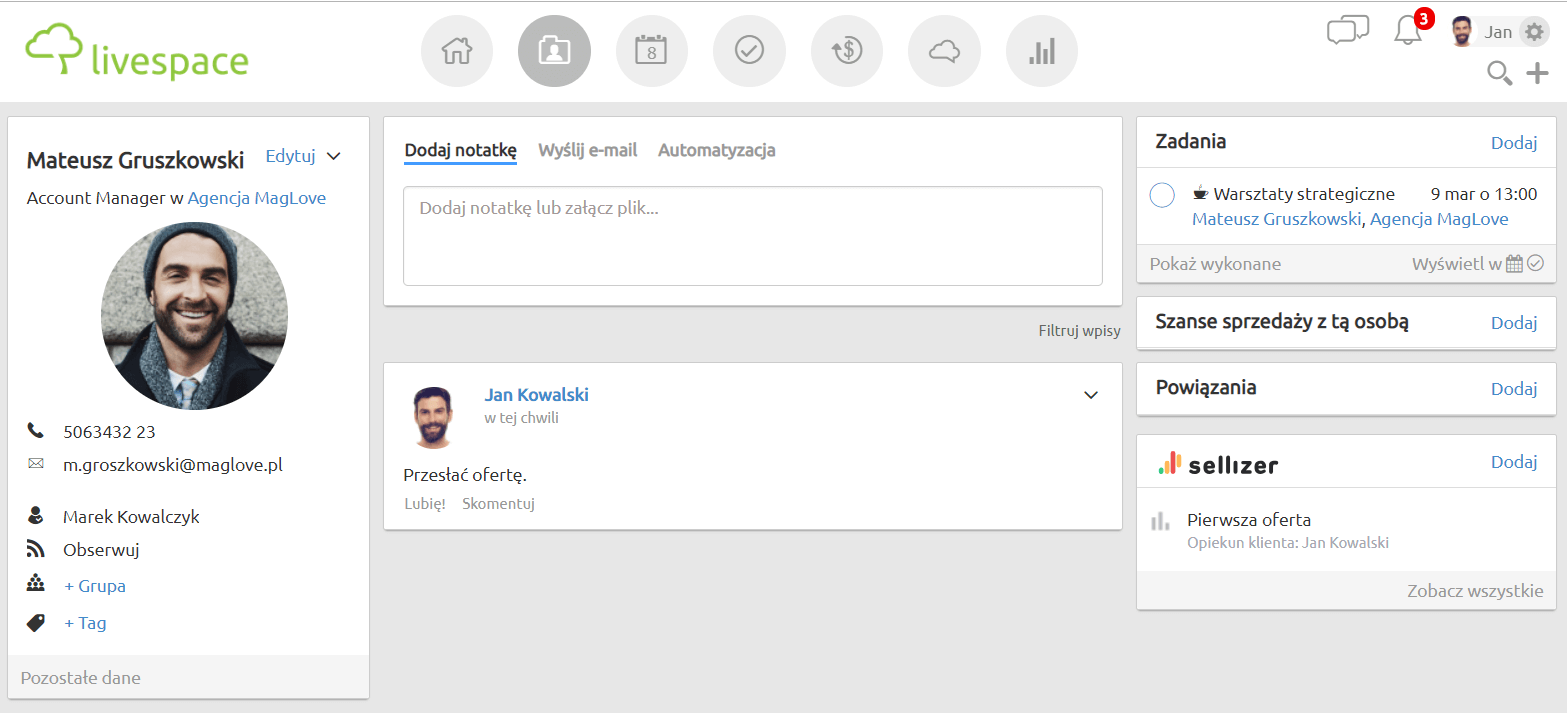
Example: Sellizer integration with Livespace CRM
3. Keep track of follow-up contacts
It may happen that when the salesperson calls a client who has just opened the proposal, they hear it is not the best moment to talk. The potential client did see the proposal, but something drew their attention away and they would like to return to it calmly. In that case, it is good to set a date for the conversation and, of course, get in touch exactly when agreed. But what if the seller is running several, a dozen or several dozen sales conversations in parallel? They should arm themselves with a tool that remembers such actions for them. For example, in Livespace CRM they can add a task right after the conversation to call at the agreed time. Then they can set a reminder for the task to make sure it does not slip their attention.
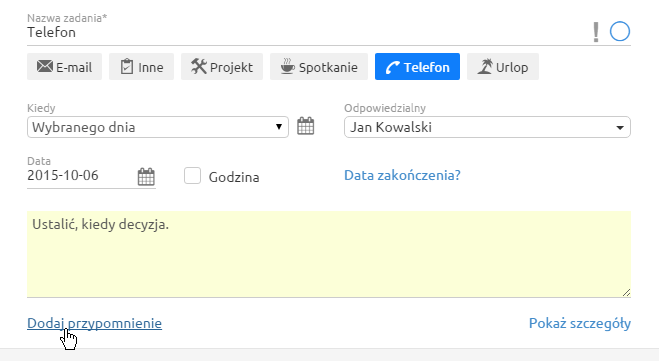
Example: Task reminders in Livespace CRM
These are just a few examples of how contact with the client can be optimized to stop wasting time on unnecessary actions and act exactly when action is welcome. Very good salespeople know they must constantly improve their sales processes to reach the client at the right moment. That is why they use technology tools that help them stay ahead of the competition.
Author: Agnieszka Zawadka - Livespace