



What Is Social Selling and Why It Works

What is social selling?
Social selling is the use of social media to make contacts and build relationships with potential clients. The goal of these activities is to establish a business relationship crowned by starting a cooperation.
The name social selling can be misleading, though. Despite the word selling in the name, selling is not a direct element of these activities. It is meant to be their result. Social selling activities cannot be direct sales messages, because any pushy sales attempts are quickly spotted and cut short by clients.
Speaking of social selling, social listening must be mentioned. It is nothing more than staying up to date with what our target group communicates, and how. Social listening is thus the starting point for effective social selling. To know what our potential clients expect and deliver a satisfying solution, we must get to know and understand their needs precisely. And what better place than social media to learn about their experiences and honest, first-hand opinions?
Social selling? LinkedIn!
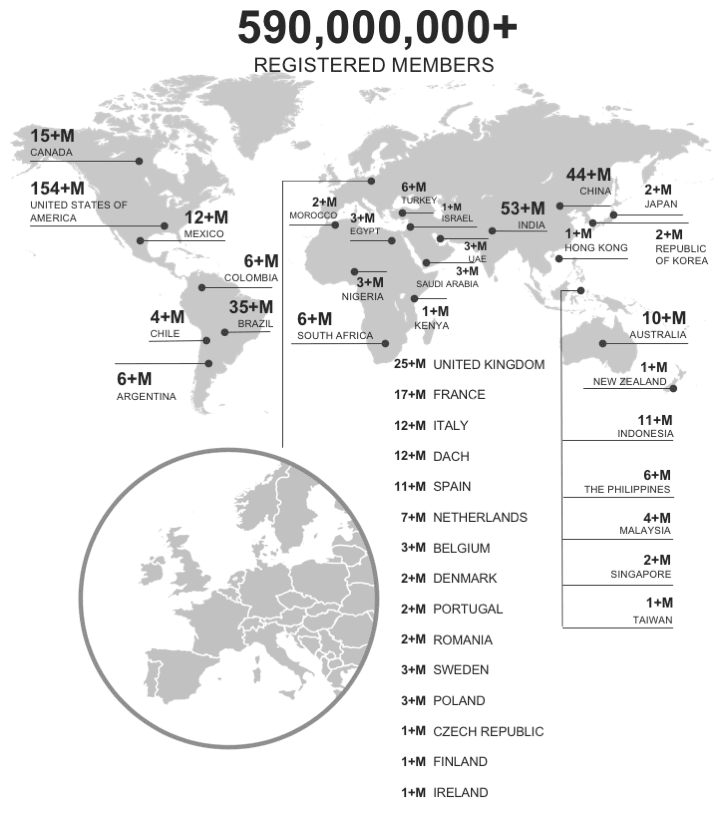
Social selling is usually associated first with LinkedIn. The portal gathers a community of over 590 million users worldwide. In Poland, it is over 3 million users. It is the place with the largest number of business-profile users, who register to make professional contacts and look for career development options.
According to statistics, salespeople using LinkedIn have as much as 50% higher chances of hitting their sales targets! Which of the portal's features can you use for this? Information found on potential clients' profiles will let you prepare precisely for the conversation. Check the Interests and Skills and endorsements tabs. Also learn exactly what duties fall within your interlocutor's position - make sure you are talking to a decision-maker in the company.
For your potential clients to know that the promises your business makes hold up in reality, fill in the Recommendations section. Positive opinions about you from colleagues, business partners or clients, in line with the principle of social proof, will encourage cooperation faster than benefit language alone delivered in marketing campaigns.
Paid LinkedIn add-ons - Sales Navigator and LinkedHelper - automate part of the activities behind effective social selling. Sales Navigator's primary goal is to make it easier to reach the portal's users who match the criteria of our target group. It works well for effectively acquiring potential clients. LinkedHelper, in turn, streamlines the process of warming up collected leads and saves plenty of time thanks to, among other things, automated sending of personalized messages and invitations. We describe these and other social selling tools in a separate article.
Why is it worth it?
Properly conducted social selling brings a range of benefits:
it supports building and increasing brand recognition (both the company's and your personal brand's),
it strengthens credibility,
it helps establish an expert position (through statements in topic groups, publishing articles, sharing valuable content from other sources, etc.),
it reduces the distance between the company and its potential clients,
it builds a loyal community of potential clients and business partners,
it shows the brand's other, highly desired "human" face: its will and readiness to help solve problems rather than a focus on mindless selling.

Most important: to whom?
You know very well that the potential of your content and messages is fully used only when they reach the right audience. The right one, meaning interested in the topic and willing to explore it.
That is why the prelude to effective social selling is defining the target group you want to reach with your messages. When building it, you must consider who your potential client is and with whom you can establish a mutually beneficial business partnership. It is not worth trying to reach the largest possible audience here. The people we address must be connected with our industry. Otherwise, our messages will not interest them.
Start by getting to know your audience thoroughly. Check who follows your company profile. Be present in discussion groups, follow the exchanges in comments and watch what they publish or share on their profiles. Engage in direct interactions, too. Use the Interests tab on LinkedIn user profiles. See what conferences they attend and what portals they visit. It will give you valuable ground for starting a conversation and perhaps establishing a lasting business relationship. Also remember to check the communication trends within your target group.
Staying up to date with the constantly changing tendencies in their behavior will let you effectively adjust your activities to their needs.
How does the LinkedIn algorithm work?
As in other social media, a special algorithm makes sure users receive quality content matching their interests. LinkedIn has published how the algorithm works on its site. Knowing it will come in handy at the content creation stage. Take a look at the graphic below and learn the key stages of the content quality assessment process.
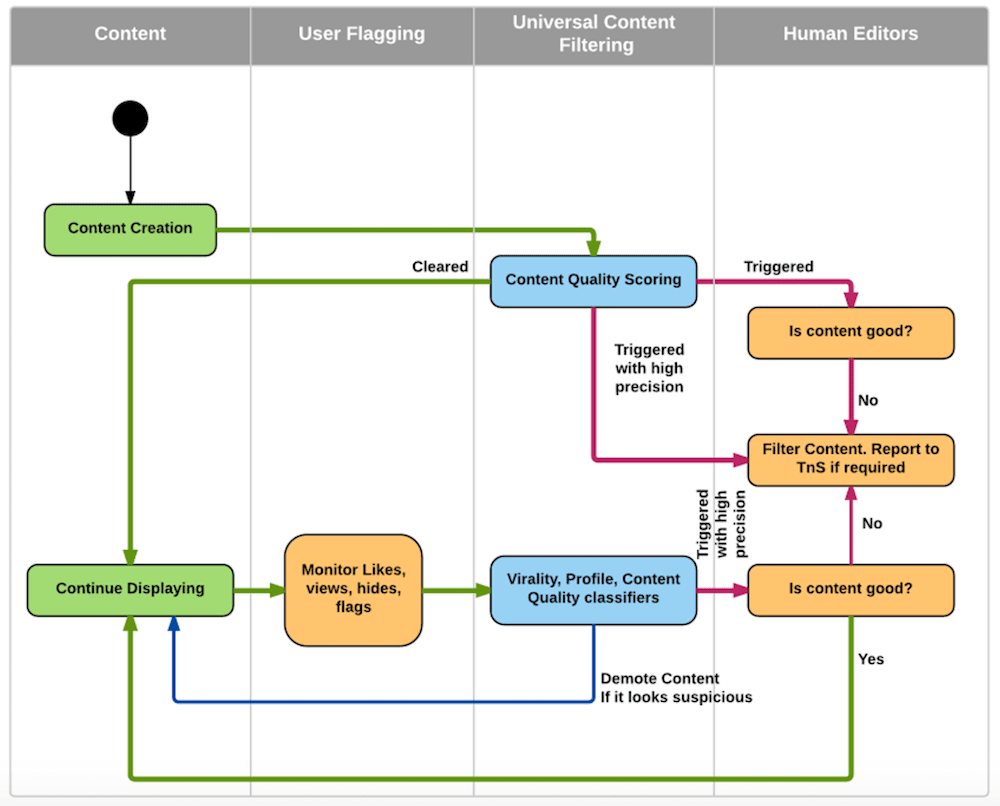
The LinkedIn algorithm's operation can be divided into 4 key stages:
Classifying content (into graphics, links, articles, video) and then marking it as "spam", "low quality" or "clear". The higher the assessed value of the content, the more often LinkedIn displays it.
Scoring the reactions and interactions the published content has gathered.
Assessing the publication's value for the network of contacts.
Review of the publication by dedicated people - the quality assessment will affect how often the content is displayed going forward.
Importantly, the LinkedIn algorithm is not operated solely by bots. A group of editors also oversees the content published on the portal. That is why you see content that is even a few weeks old and still attractive to users.
Consistency is the key to social selling success
Social selling is effective when conducted systematically and carefully. One-off actions will not work here. Neither will those based on content of little value (from your target group's perspective) and a low level of interaction. Salespeople with the best sales results spend at least 6 hours a week on LinkedIn, checking potential clients' profiles, participating in industry groups and publishing interesting, engaging content.
For your activities to bring results, you must invest your time and commitment. Social selling is a long-term game. Plan how much time you can devote daily to developing your profile (both private and company) on LinkedIn and reserve it in your calendar. At the start it can be even 10 or 20 minutes a day. Regularity is key. Analyze your activity on an ongoing basis to know whether your methods are working well or a change of approach is needed.
Social selling - a checklist
If you want to effectively deliver on your sales plans using social selling, remember these rules:
act systematically,
publish quality messages and content carefully matched to the needs of your target group,
interact with your audience,
engage with and take interest in industry topics,
stay up to date with the trends in your target group and adjust your methods to them,
constantly analyze and improve your activities.
Social selling is not a passing fad that will disappear as quickly as it appeared. Social selling is proof of salespeople adapting to changing sales realities. Social media have become the main place of communication, and there is no sign of their position weakening. Especially since new generations of consumers are entering the market, for whom the latest technologies are the primary source of information. With that in mind, it is worth taking action on this ground. Properly prepared and conducted, it will let you use the significant potential social media hold for salespeople. Use your presence on social media, build relationships and win new clients.
FAQ
Is social selling just posting on LinkedIn?
No. Posting is one tactic; social selling is the whole practice of finding, listening to and building relationships with potential clients on social platforms. Commenting on prospects' posts, researching decision-makers before a call and warm outreach after an interaction all count - often more than your own publishing.
How long does it take for social selling to bring results?
Treat it as a quarters-long game, not a campaign. First conversations usually appear after 4-8 weeks of regular activity (10-20 minutes a day), and a repeatable pipeline effect after about a quarter. One-off bursts of activity produce almost nothing - regularity is the whole trick.
Do I need Sales Navigator to do social selling?
No - a complete profile, consistent activity and thoughtful comments cost nothing and deliver most of the value. Sales Navigator pays off once you prospect at scale: its filters and lead lists save real time when you are searching for dozens of lookalike prospects a week, not before.
How do I measure social selling?
Skip vanity metrics and count what feeds the pipeline: conversations started, meetings booked and deals influenced by social touchpoints. LinkedIn's SSI is fine as a habit tracker, but no one ever hit quota with an SSI score - tie the activity to opportunities in your CRM.